A joint venture in community economic development

Meet the Team

Two independently developed bodies of work. Three active stewards. One shared experiment.

The Anti-Fragile Playbook began when Ruth Glendinning joined Kent Dahlgren and Trudy Martinez in 2020 to combine their complementary approaches to community economic development.

Ruth brought Community Renaissance Market and S.L.O.W. Tech: a working model for incubating household-scale enterprises through shared resources, culture, and relationships. Kent and Trudy brought 214 Alpha, the technology venture they launched together in 2018, along with their experience in community activation, human-centered design, and digital governance.

The resulting undertaking asks a deceptively simple question: what if communities could reproduce the benefits of a thriving marketplace without depending on a centralized building to make it possible?

Where the story begins

Before the Playbook, there was a working marketplace.

In 2009, Ruth Glendinning repurposed a former 60,000-square-foot Albertsons grocery store in Austin, Texas, into the Community Renaissance Market.

The market supported more than 90 household-scale businesses, providing a shared environment where entrepreneurs, makers, producers, and customers could discover one another.

It was not a proposal, a rendering, or a theoretical exercise. It was an operating microbusiness incubator built around the productive capabilities already present in a community.

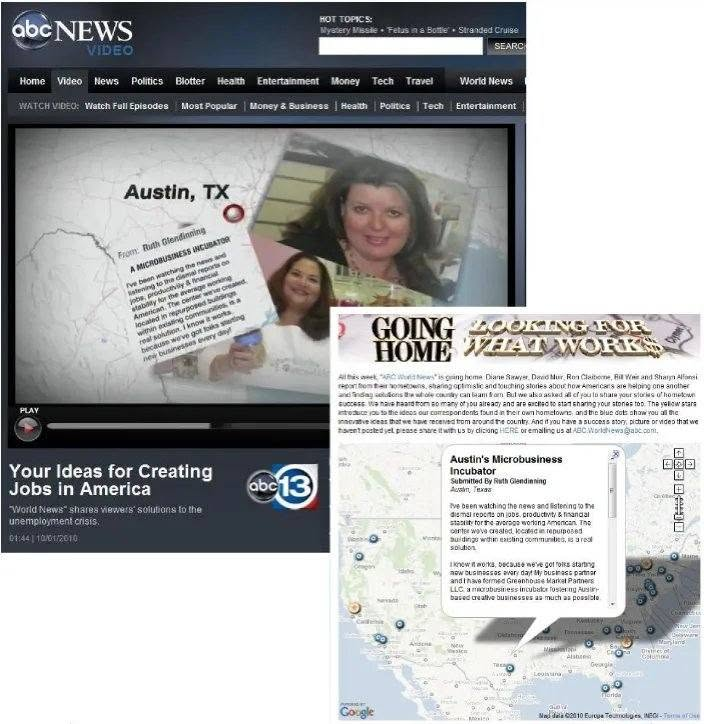
Ruth's work received national recognition, including coverage on ABC World News Tonight with Diane Sawyer.

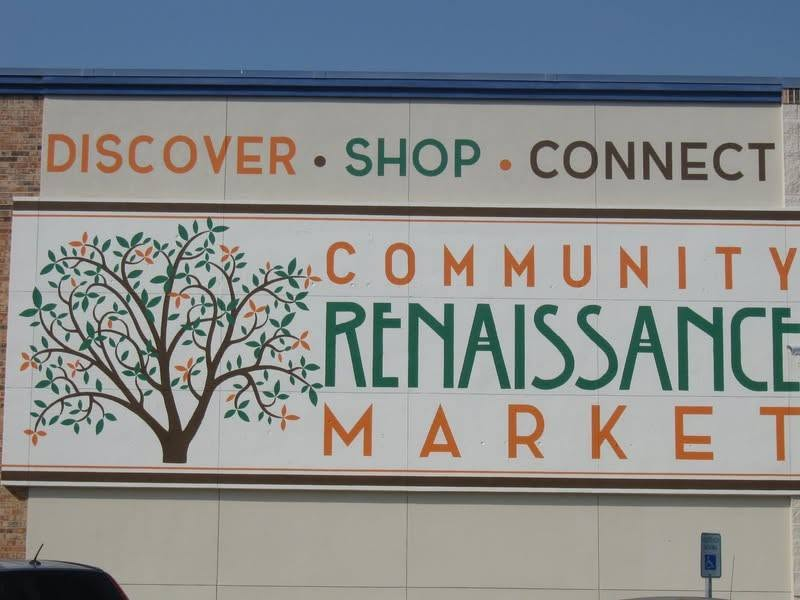
Original Community Renaissance Market storefront in Austin, Texas
The original Community Renaissance Market. Its invitation: Discover. Shop. Connect.
Historical ABC World News Tonight coverage of Ruth Glendinning's Community Renaissance Market work
Historical ABC News coverage of Ruth's microbusiness incubation work.
The lesson

Shared infrastructure multiplies opportunity.

An individual entrepreneur might not be able to afford an independent storefront, commercial kitchen, or customer acquisition operation.

But those capabilities can become accessible when the costs, resources, and relationships are shared.

The Community Renaissance Market demonstrated that community economic development could begin with people who were already productive, rather than waiting for a major employer or outside institution to arrive.

Ruth's economic development model

S.L.O.W. Tech

Sustainable Local Organic Work + Technology.

Ruth's S.L.O.W. Tech approach brings together culture, community, commerce, and appropriate technology to help household-scale enterprises participate in a broader economy.

It begins with the productive knowledge people already possess: traditional skills, cultural practices, food production, creative work, and the relationships that make exchange possible.

Technology should extend those capabilities without displacing the human relationships that give them value.

The machine belongs under the hood. The people remain visible.

The Anti-Fragile Playbook inherits this essential proposition: economic development should make a community more capable of sustaining itself, not merely more dependent on external systems.

From one building to an entire community

Community Renaissance Market 2.14

The original Community Renaissance Market demonstrated the benefits of shared infrastructure. But it also carried the substantial financial obligations of a large physical facility.

Ruth's evolving vision, which she calls CRM 2.14, preserves the economic and social functions of that marketplace while reducing dependence on centralized real estate.

Original CRM

One market. One location.

Enterprises, customers, shared resources, and relationships concentrated in a single facility.

The advantage: proximity, visibility, and common infrastructure.

The constraint: the cost of maintaining the physical marketplace.

CRM 2.14

One ecosystem. Many locations.

Existing kitchens, workshops, meeting spaces, enterprises, and community resources connected through relationships and appropriate technology.

The advantage: coordination without requiring everything to operate under one roof.

The opportunity: more productive participation with lower fixed overhead.

Imagine a church with a commercial kitchen that sits unused for much of the week. A local food entrepreneur might be able to use that facility rather than finance another. The entrepreneur gains production capacity, while the church gains a meaningful relationship with its surrounding community.

This is an illustrative application of CRM 2.14, not a claim that such a partnership has already been implemented through the Tannehill pilot.

The ambition is larger than putting a storefront on the internet. It is to connect underused assets, local enterprise, and trusted relationships into an economic ecosystem that can function across an entire community.

Same People. More Possibilities.
How the work came together

Two histories. One shared undertaking.

2009

Community Renaissance Market

Ruth establishes the physical market and microbusiness incubator in Austin.

2018

214 Alpha

Kent and Trudy launch 214 Alpha, developing technology for community self-governance and coordination.

2020

Anti-Fragile Playbook

Ruth, Kent, and Trudy combine their complementary work in a joint venture.

2026

Tannehill Marketville

The active pilot launches its community app and continues recruitment and activation.

The three principals

The people behind the experiment.

Cultural and economic development. Technology and governance. Human-centered design and community stewardship.

The Anti-Fragile Playbook depends on all three disciplines working together. None is a substitute for the others.

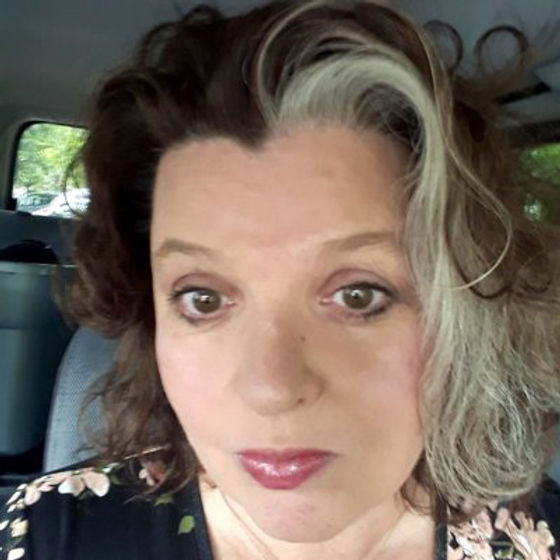
Ruth Glendinning
Culture · Enterprise · Economic ecosystems

Ruth Glendinning

Founder, Future Story Lab

Ruth Glendinning has spent decades exploring how communities can cultivate economic opportunity through their existing cultural, creative, and productive resources.

In 2009, she established the Community Renaissance Market in a former Austin grocery store, supporting more than 90 household-scale businesses through a shared marketplace and incubation model.

Her S.L.O.W. Tech approach connects sustainable local work, culture, commerce, and appropriate technology. Through Future Story Lab, she continues to develop models that recognize the economic value of relationships, practical knowledge, and community identity.

Ruth's vision for CRM 2.14 provides an essential foundation for AFP: preserving the benefits of a functioning marketplace while extending them beyond the walls of a single building.

She remains actively involved in the continuing work of the Playbook.

Explore Future Story Lab ↗
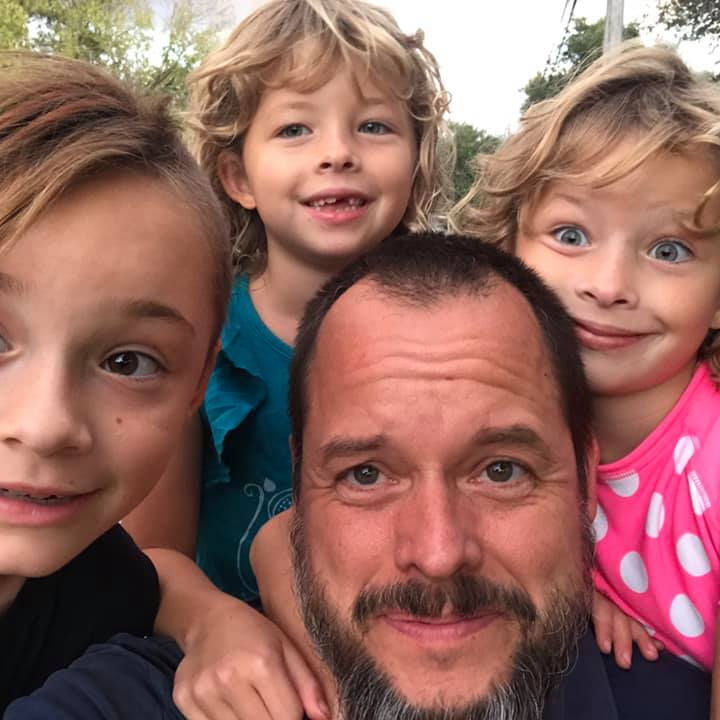
Kent Dahlgren
Technology · Governance · Community

Kent Dahlgren

Co-founder, 214 Alpha · Founder, Bene Esse

Kent Dahlgren brings decades of experience in advanced technology, information security, distributed systems, and grassroots community organizing.

His community work includes involvement with Burnside Skatepark, Skaters for Public Skateparks, and service on the board of the Tony Hawk Foundation. His technology work has included internationally recognized tools developed for refugees and stateless populations.

In 2018, Kent and Trudy Martinez launched 214 Alpha, developing technology to support digital identity, communication, marketplaces, reputation, dispute resolution, and self-governance.

Within AFP, Kent helps connect this technical architecture to practical community activation and economic coordination. The technology is intended to serve the people and relationships at the center of Ruth's model.

His continuing work with Bene Esse and related initiatives explores broader questions of community governance, activation, and stewardship.

Explore 214 Alpha ↗
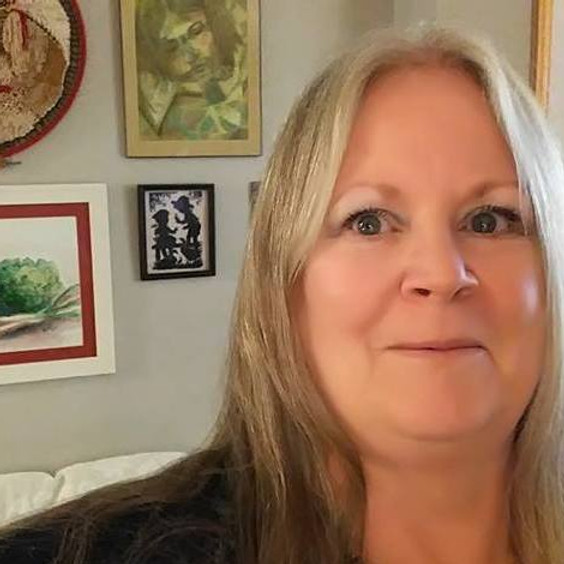
Trudy Martinez
Human-centered design · Activation · Stewardship

Trudy Martinez

Co-founder, 214 Alpha · AFP Editor and C.A.L.M. Process Steward

Trudy Martinez brings 35 years of professional experience in occupational therapy and a longstanding commitment to designing systems around the needs and capabilities of actual human beings.

Her background includes rehabilitation, elder care, sensory integration, and helping people navigate complex practical challenges.

In 2018, Trudy co-founded 214 Alpha with Kent Dahlgren, bringing her experience in human-centered design into technology product development, operations, and community activation.

Within AFP, Trudy helps translate ambitious ideas into processes that people can actually participate in. Her work includes stewardship of the C.A.L.M. process, which guides communities from outrage and vision through funding, activation, launch, and long-term stewardship.

She remains an active principal in the Playbook and in the continuing work shared with Ruth and Kent.

The experiment continues

Tannehill Marketville Collective

The Tannehill Marketville Collective is an active Austin-area expression of the Anti-Fragile Playbook's approach.

Its community application launched in 2026, with recruitment, administrator training, and local economic activation continuing.

The purpose is not merely to create an online storefront. It is to help people identify, coordinate, and make productive use of the resources already within their community.

Tannehill is one ongoing experiment in a much larger question: how might communities become more capable of caring for themselves through commerce, reciprocity, and shared stewardship?

The work beyond the Playbook

Four complementary initiatives.

The people and ideas behind AFP also contribute to a wider ecosystem of independently identifiable endeavors.

These are distinct initiatives, not interchangeable names or claims of a single legal organization. Each explores a complementary dimension of the work.

Culture and economic development

Future Story Lab

Ruth Glendinning's work in cultural strategy, S.L.O.W. Tech, household enterprise, and community economic ecosystems. Its roots include the original Community Renaissance Market and the continuing evolution of CRM 2.14.

Visit Future Story Lab ↗
Technology and governance

214 Alpha

Founded by Kent Dahlgren and Trudy Martinez in 2018, 214 Alpha develops infrastructure for community self-governance, identity, communication, marketplaces, reputation, and coordinated action.

Visit 214 Alpha ↗
Community marketplace infrastructure

Commonweave

Commonweave is the public-facing marketplace identity of the application developed through 214 Alpha, helping communities connect local enterprises, participants, and opportunities for economic exchange.

Visit Commonweave ↗
Community activation and stewardship

Bene Esse

Bene Esse brings together the continuing work of Ruth, Kent, and Trudy in a broader approach to community activation, economic participation, governance, and long-term stewardship.

Visit Bene Esse ↗
Further reading

Two ways to explore the underlying ideas.

The Church That Became Useful on Monday

A Commonweave case study illustrating how existing community facilities might become productive shared infrastructure without requiring a new centralized marketplace.

Read the Case Study ↗

The Seven Functions of Digital Self-Governance

214 Alpha's March 2026 white paper describing the broader digital governance architecture. It is a technical reference, not a claim that every capability is deployed in Tannehill.

Read the White Paper ↗
Discover · Shop · Connect

The marketplace was never just a building.

It was the people, the relationships, the productive capacity, and the opportunities they created together.

The Anti-Fragile Playbook is an invitation to discover what those same capabilities can accomplish when a community learns to coordinate them in new ways.

Anti-Fragile Playbook

Community. Culture. Commerce. Technology in service of people.